Unexplained Hostility Toward My Family — How a Single Misunderstanding Turned into Years of Resentment
My partner showed an inexplicable hostility towards my family. Despite having met them only a handful of times, they would hurl harsh abuse at them in front of me.
“One day, I’ll make them suffer.”
“I’ll take revenge on your family.”
I asked why they felt such intense hatred towards people with whom they had barely exchanged a few words. But they never offered any explanation.
Years later, when their behaviour began to soften and they gradually started to open up to me, they finally revealed the reason they had been insulting my family for so long.
It stemmed from something that happened at my grandmother’s funeral. When my partner offered condolence money, as is customary in Japan, my younger sister apparently said, “That was very kind of you.” I am certain she meant nothing by it.
My partner, however, took that single remark as condescension — as if they had been looked down upon. That alone became the basis for years of abuse directed at my family.
I was stunned. The gap between my sister’s brief comment and the torrent of hostility that followed felt utterly disproportionate. Yet, within my partner’s internal logic, this line of reasoning had somehow been justified.
Escalating Anger and Loss of Control — When Fear Became Part of Everyday Life
As our marriage continued, my partner’s domineering behaviour and disregard for social norms escalated day by day. It is possible that my enduring it for so long only reinforced it.
I no longer remember the details, but one day, after yet another disagreement, something happened that I will never forget.
While I was taking a shower, I heard a dull, unfamiliar cracking sound from outside the bathroom, accompanied by a slight vibration. For a moment, I wondered if it had been an earthquake.
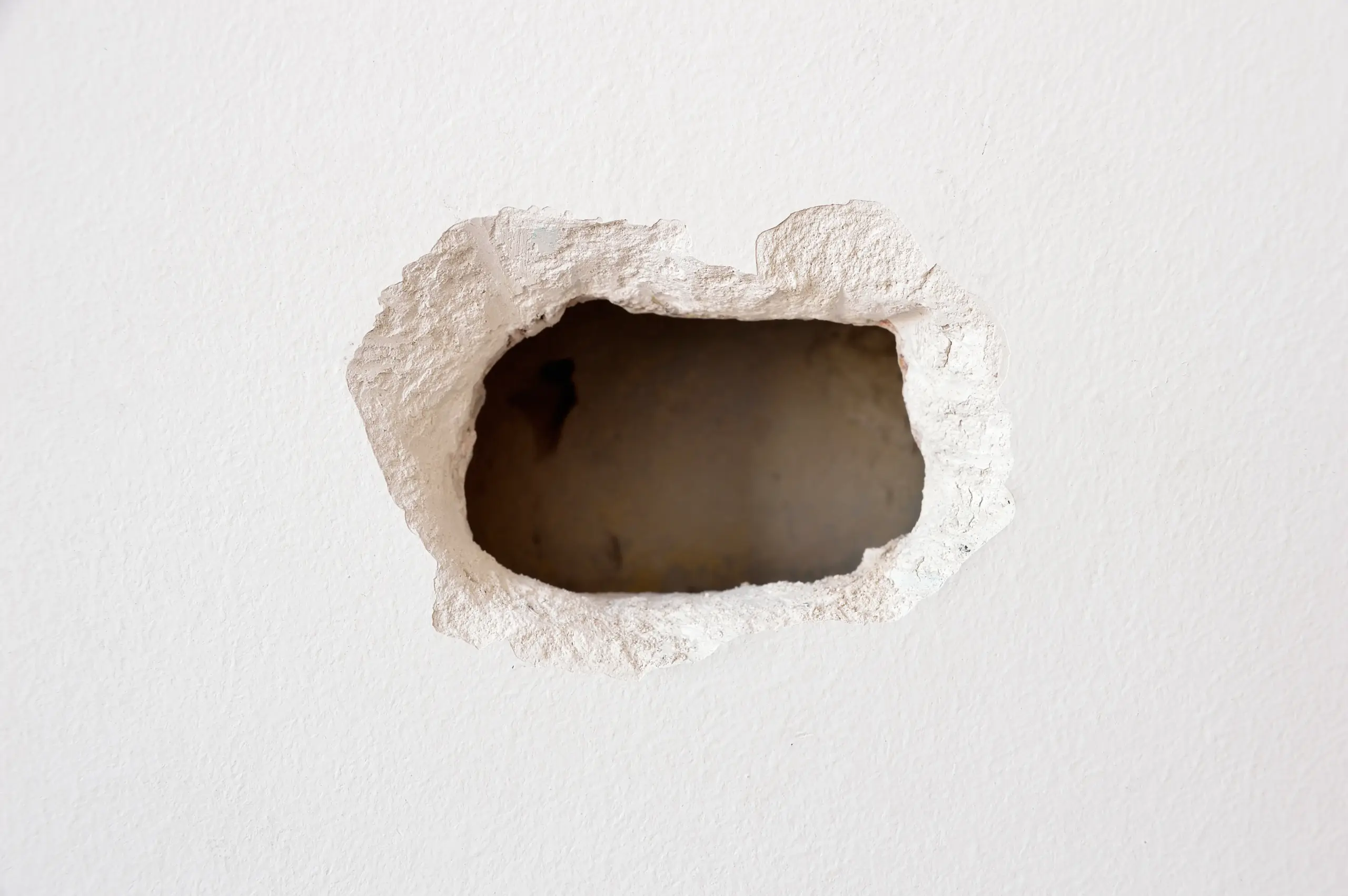
When I stepped into the living room, I could hardly believe my eyes. A deep, gaping hole had been punched through the wall — large enough to expose the inner surface of the building itself. Broken fragments of plaster and wall material lay scattered across the floor.
The sound I had heard came from my partner, who, in a fit of rage, had hurled a dining chair at the wall. One of its legs had smashed straight through it. I stood there, speechless, confronted with the sheer force of their anger.
On another occasion, I was shouted at in the middle of a crowded intersection in Tokyo.
After an argument, I said, “Enough,” and started crossing the street alone. My partner ran after me, yelling “Wait!” at the top of their voice and roughly grabbing the sleeve of my jacket.
Dozens — perhaps over a hundred — pairs of eyes turned towards us at once. I felt like crying at the lack of restraint, and at the same time, the stares of strangers pierced me with a deep sense of shame.
There was also an incident during a holiday at a hot spring hotel. The room had a bedroom and a living area separated by a short corridor. We argued there as well.
Hearing a loud crash from the living room, I went to check, already knowing what I would find. As expected, the heavy table had been flipped upside down, its legs pointing towards the ceiling — as if it had been overturned in a moment of blind fury.
It must have taken considerable strength to flip such a solid piece of furniture. Faced with that raw energy and the recklessness of taking it out on hotel property, I found myself unable to speak.
Another time, after an argument while walking near our home, I turned back alone, saying, “I’m going home.”
Seconds later, I heard heavy footsteps behind me. When I turned around, my partner was charging towards me, face contorted with rage, tears streaming, fists raised. It felt almost unreal — like something out of a comic strip.
At that moment, I noticed a woman standing on a nearby balcony, looking down at us. I remember thinking, “We’ve been seen.” The relationship I had tried so desperately to conceal had finally become visible to others.
The moment I found most unforgiving occurred while we were driving down the Tōmei Expressway, on our way to my hometown for my father’s funeral.
I hoped, at least during such a time, that the attacks would stop. They did not. We argued in the car, apparently over whether my partner’s parents would attend the funeral.
Whether from exhaustion, emotional strain, or the heat, I eventually became unable to move during the funeral itself. A kind staff member from the funeral home wrapped ice in a towel and handed it to me. The same partner who had been shouting at me in the car moments earlier gently pressed it against my neck.
In this way, my partner’s anger was violent, sometimes absurd, and at times chillingly cold. It felt fundamentally different from ordinary anger.
This may sound strange, but whenever my partner lost all restraint, I could not help thinking of the film Predator, starring Arnold Schwarzenegger.
At the height of those episodes, my partner seemed less like a person and more like the creature in that film. In my own extreme psychological state, both their behaviour and appearance felt stripped of humanity. That is how overwhelming it all felt to me.
A Home That Was Not Safe — Living in Constant Fear and Emotional Erosion
I often returned home on the last train, yet the walk from the station to our flat felt unbearably heavy. I was afraid of going home.
“What will happen tonight?”
“Did I do something to upset them?”
“Will I be able to go back to my room without another argument?”
“Will I get two or three hours of sleep?”
These thoughts ran through my mind every single night.
Sometimes, I deliberately stopped at a convenience store or a small supermarket before heading home. The bright lights felt like a refuge, and I found myself envying the ordinary shoppers going about their lives.
As I write this chapter, many painful memories have resurfaced. Among them, there are three words that struck my heart like arrows.
There was a period when my partner ignored me completely. Those days felt like walking on eggshells. They ended abruptly, with these words — as if my suffering had simply bored them.
“I suppose I’ll stop ignoring you now. It’s starting to feel a bit cruel.”
Another time, on a hot morning, I returned from a jog drenched in sweat. My partner, who had just woken up, looked at me and said:
“You should have just collapsed and died somewhere.”
When I asked why they would say something so cruel, the answer was this:
“Because you’re my punching bag.”
At that moment, before anger or sadness could even arise, my mind went completely blank.
For me, home was not a place that could be called a family. Calling it hell would not be an exaggeration. Worse still, at the time, I had lost even the ability to recognise how abnormal the situation was. I was entirely dominated by fear and confusion.
Yet, after more than a decade, my partner began — slowly — to change.
Next Chapter — A Partner Who Began to Change, Little by Little
From the next chapter onwards, I will turn to those changes.